
This month I wish to run through the IDUG NA 2025, not every presentation but the ones I attended or held. The IDUG was a very good one indeed, I thought! My colleague Ulf and I got off to a bad start when we missed our flight connection in Amsterdam due to bad weather but KLM got us on a flight to Boston, so we arrived in Atlanta only six hours later than planned… Ho hum! Such are the banes of modern life!
Db2 for z or Db2 for LUW?
You might well have heard that the IDUG have moved away from a pure z/OS or LUW style “tracks” system and now do a more named approach which *still* catches people out, as they assume that everything in the second column is just for LUW – Not true dear readers! Anyways, it *always* pays to read through the whole grid before planning your 10,000 steps per day timetable!
Keynote
The opening keynote “Leveraging your Db2 Data for Enterprise AI” from two IBM VPs: Minaz Merali and Priya Srinivasan, was a very good one and well attended, we just managed to finish getting our booth ready in time, as it was “news to us” that the Expo was also where the Keynotes were going to be held all week!
It starts!
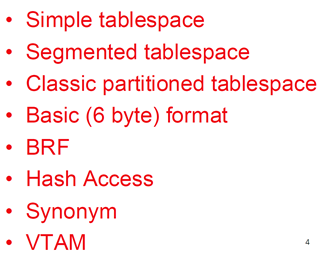
The technical sessions then kicked off with a “Spotlight” session from Haakon Roberts doing his excellent “Trends and Directions” as a double header with Akiko Hoshikawa as well. It was listed as session A1 in the grid but then IDUG said it was S1 – which caused some confusion when filling in the reviews! Anyways, I really enjoyed it, especially the interaction with the audience, as they all suddenly realized that in a few short years several, or maybe lots, of their objects will be unsupported… For you, dear readers, just download and run my good old Migration HealthCheck for Db2 z/OS to see how many of the evil beasts, that IBM are now officially killing off, you still have lounging around in production! We all have time, lots of time, to “fix” these problems – Don’t panic! Even IBM must do some work to finally get rid of Simple, Multi-table and non-UTS tablespaces in the Directory and Catalog!!! But start planning and checking now… forewarned is forearmed!
Performance Review [access @ IDUG]*
Then came A2 from Akiko Hoshikawa with the “Key Performance Updates” session – again an excellent session, with the great tip around DSMAX : you should be extremely careful about having a very large number of open datasets, especially indexes, as the Root Page is always pinned in the buffer pool! So, if you have 100,000 open indexes you can imagine how bad your buffer pool(s) will look like! Secondary problem is actually the time it takes to close all these datasets at Db2 shut down… Db2 does not actually care and passed the buck to z/OS to do it all!
RUNSTATS & Monitoring [access @ IDUG]*
Then I held my first session: C3 “RUNSTATS Master – reloaded ” if you want to learn waaaay more than you should about RUNSTATS feel free to also download and run our Statistics HealthCheck for Db2 z/OS. Then I popped over to see the Tom Glaser session E5 “Don’t have an SQL monitor? You might need a bigger shovel” where he drilled down into the nuts-and-bolts of what you must/should monitor and showed which metrics are useful for tuning your systems.
Keynote – Treasure
Tuesday began with another good key note session from Greg Lotko, a Senior VP at Broadcom. All about Pathfinders and finding treasure – extremely entertaining, I thought!
Utilities Review [access @ IDUG]*
Later the sessions started and I joined Ka Chun Ng for his “Db2 for z/OS Utilities” session as moderator… Here, some technical problems raised their ugly heads, and we had bad audio/visual issues which delayed the start by about ten minutes. This meant Ka Chun could not finish his presentation. This was a real shame, as it is crammed full of great stuff for us Utility nerds out there! He even updated me about an error I had in my RUNSTATS presentation – fantastic! Top things here, were the zIIP offload for COPY – Not much CPU is actually offloaded but how *many* image copies do you run every day?? REGION=0M is the best for utils, but we can never use that, can we? He pointed out that utilities are capped to 1.6GB – now you can allocate a correct REGION size without breaking your firm’s internal standards. Slide 19 was a useful reference for large REORGs, that we must all do at some point, to finally get to PBR RPN tablespaces. He also mentioned one of my favorite bug-bears as well -> REORG SYSLGRNX regularly with MODIFY RECOVERY – This shrinks its size dramatically and really improves over-all system performance in a major knock-on effect! Loads of people either do not know this or just do not bother!
Hack Attack? [access @ IDUG]*
A quick stroll back through the rabbit warren of rooms and corridors then brought me to F7: “How to Hack Db2 for z/OS” by Emil Kotrc – Have no fear friends, there is nothing here that will let hackers into your system like a zero-day style hack, but it is a full list of possible vectors that should be a) known about and b) discussed. Biggest take aways -> Check your access permissions to APF Authorized load libraries and sanitize your dynamic SQL input!
Top Ten Lists [access @ IDUG]*
After lunch I moderated Craig Mullins’ D8: “My All-Time Db2 Top Ten lists” which won the best user presentation award! Full of great info and great fun to see/hear. You always learn stuff at Craig’s presentations!
Security! [access @ IDUG]*
Next up was F9 from Gaya Chandran: “Modernizing your Security posture around Db2 z/OS data” which rang bells with me in my Auditor role. Slide nine was the biggest winner for me… And then she reviewed all the new/old/nice security things we have on Db2 for z/OS that must simply be reviewed and/or used… It could make your world much better!
Keynote – Go take a Hike!
Wednesday started with another great keynote from Jennifer Pharr Davis. I had a chat with her at our booth before she started and she was really interested in Db2 and the whole ecosystem. She is, what I would call, an extreme hiker! She has walked the Appalachian Trail (Spans 14 States and nearly 2,200 Miles/3,500 km) three times. Madness, I would say, but from these experiences she learned a lot about resilience and adaptability!
Profile Tables! [access @ IDUG]*
Then into session D10 with Scott Walker and Gaya Chandran: “Db2 z/OS 13 – using Profiles to monitor/block unsecure TCP/IP connectivity” we learned how Scott set up, ran, monitored, and updated all his Db2 systems to go from insecure to secure TCP/IP port usage in a well-planned and documented style. This highlighted the usefulness of PROFILE tables and proves again that this is one of the best features ever in Db2 for z/OS, in my opinion!
DORA & PCI DSS [access @ IDUG]*
Then I was up again with D11: “Isn’t she aDORAble?” all about Audit, Compliance, Resilience and how much we need to change into “internal auditors” before a “lead overseer” comes along and makes your life horrible! Feel free to use this presentation at your site to hammer home how much it will cost if you do not start doing stuff now! Due diligence… Try out our freeware SecurityAudit Health Check for Db2 z/OS.
Time to go!
That was it for me – Had to leave in the middle of lunch to get my flight back home! One last word must be mentioned about the food – Fantastic! The lunch and coffee break beverages and food were simply great! My personal favorite was when I was at the dessert table and saw “Mexican Chocolate Cheesecake” and wondered out loud to a random guy next to me “I didn’t know that Mexicans made chocolate cheesecake” he replied “The funny thing is nor did I – and I am Mexican!” Made my day!
and finally…
My colleague Ulf also got to hold a session: B15 “Understand, Manage and Love Certificates in z/OS and USS” [access @ IDUG]* on Thursday which was all about the “brave new” world of certificates and key-rings and how you cannot afford to ignore them anymore! All went down splendidly!
TTFN,
Roy Boxwell
If you attended, or it is two/three years later 🙂 , you can access all of the presentations here [access @ IDUG]*.
At the time of writing the A1/S1 presentation from Haakon is sadly not available…
Note: * To get the links to work you must be registered at IDUG *and* entitled to the content. Otherwise you will get an “Oops!” screen popping up tell you that you lack authorization! If that is the case you can then think about buying the “Premium” version of IDUG membership which does allow downloading of conference files without having to wait around two years.